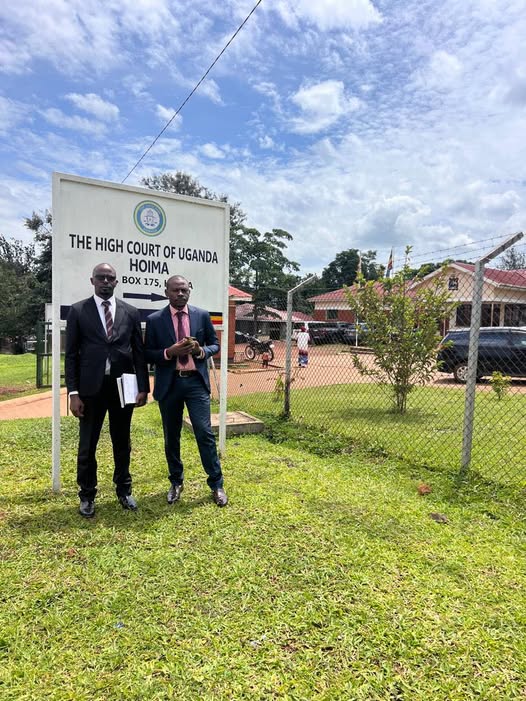
High Court, Hoima | April 2026
In a courtroom at the High Court in Hoima, a community’s fight for survival took a significant legal turn this week as lawyers representing the Kapaapi people squared off against oil giant TotalEnergies in a case that could determine the fate of more than a thousand Ugandan families.
Arinaitwe Peter and Mugume Hassan appeared before the court on behalf of the Kapaapi community, while Omara Fabian represented TotalEnergies in proceedings that have drawn quiet but growing attention from human rights observers across the region.
A People Under Siege
At the heart of the Kapaapi community’s application is a request for the court to immediately halt any dealings — including sales, transfers, or developments — involving the disputed land in Runga, Waaki, and the RAP 4 corridor. But land titles are only part of the story.
The community’s lawyers painted a picture of a people living in fear. They urged the court to stop the eviction of more than 1,000 affected residents without a valid court order, to bar the involvement of armed UPDF soldiers in any activities related to the disputed land, and to preserve the status quo before irreversible harm is done. Perhaps most tellingly, they asked the court to extend its protection to residents, witnesses, and community defenders who, they say, face ongoing threats, violence, and the very real danger of being evicted all over again.
These are not abstract legal demands. Behind each of them is a family — a home, a garden, and a life built over generations on land that is now at the centre of one of Uganda’s most high-profile oil-related displacement disputes.
TotalEnergies Pushes Back
TotalEnergies, the French energy giant developing the controversial East African Crude Oil Pipeline and associated infrastructure in the Albertine region, categorically denied any involvement in the evictions and formally opposed the community’s application. The company’s position was straightforward: it did not carry out the evictions, and it should not be held responsible for them. Whether the court accepts that position is now the central question.
The Road to a Ruling
With both sides having presented their initial positions, the procedural calendar is now set. The Kapaapi community has until 21 April 2026 to file its rejoinder and written submissions, while TotalEnergies will follow with its own response by 27 April. The court is then expected to deliver its ruling on the interim orders on 4 May 2026.
That ruling, just weeks away, will be watched closely — not only by the thousand-plus residents whose homes hang in the balance, but by civil society groups, legal advocates, and international observers who have long raised concerns about land rights along the EACOP corridor.
Why This Matters
The Kapaapi community’s case sits within a broader and deeply troubling pattern of grievances from communities living along Uganda’s oil infrastructure routes. For years, critics of the EACOP project — which stretches over 1,400 kilometres from Uganda to the Tanzanian coast — have raised alarms about inadequate compensation, forced relocations, and the use of security forces to silence those who dare to speak out.
For the families of Runga and Waaki, however, this is not a policy debate. It is their lives. This court case is, for many of them, the last institutional stand between their community and permanent displacement from the land their families have called home for generations.
The court reconvenes in May. Until then, the community waits — and hopes the law moves faster than the bulldozers.
Follow this space for updates ahead of the ruling expected on 4 May 2026.


Leave a comment